News · Network
Ookla: twice as many US Starlink users hit 100/20 Mbps in the first half of 2026
Ookla's H1 2026 US report found twice as many Starlink users reaching the FCC 100/20 Mbps benchmark as a year earlier, with 17 states above 50 percent.
NetworkReported by press, not confirmed on Starlink’s pages
- Event
- Report covered H1 2026; reported 2026-09-15
- Published
The short answer
- What changed?
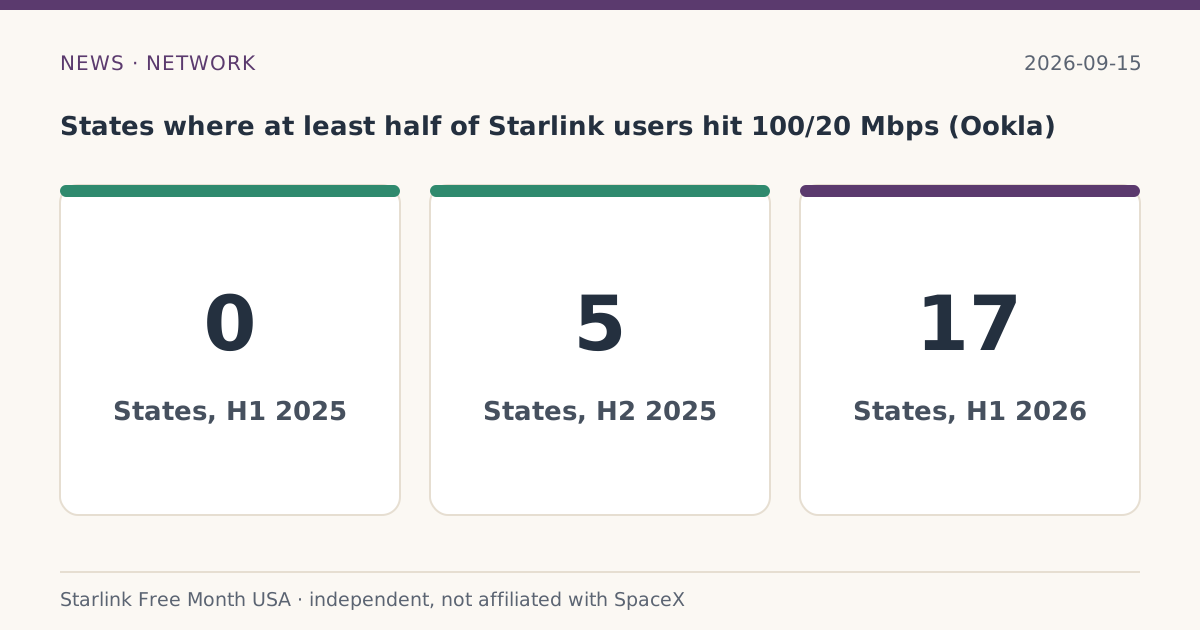
- Ookla's US Broadband Performance Report for H1 2026 found twice as many US Starlink users reaching the FCC's 100/20 Mbps benchmark as a year earlier. In 17 states at least half of Starlink users reached it, up from none in H1 2025, per Broadband Breakfast on 2026-09-15.
- When?
- Data period: first half of 2026. Reported 2026-09-15.
- Who is affected?
- Anyone weighing Starlink at a US address. Results vary a lot by state.
- What should you do now?
- Use the 30-day return window to test the service at your own address; a state average can't tell you what your cell will do.
- What stays the same?
- Starlink's Referral Program Terms, as we read them on 2026-10-05, still give a new customer one free month on the eligible plan they pick, credited to the second monthly bill. You still pay month one, still need to order the kit and plan on starlink.com through a current customer's link, and still need two full billing cycles on a high-speed plan (Standby doesn't count).
Source
- Ookla: Starlink Performance Surged in First Half of 2026 Press
continues to trail terrestrial broadband
What Ookla found
Broadband Breakfast reported that, in the first half of 2026, 17 states had at least half of their Starlink users reaching 100 Mbps down and 20 Mbps up. That number was zero in H1 2025 and five in H2 2025. South Dakota led at 58.2 percent of users, up from 37.1 percent a year earlier; Nebraska followed at 57 percent, and Colorado, Wyoming and Minnesota were above 55 percent.
Ookla also said Starlink "continues to trail terrestrial broadband": 46 states and Washington, D.C., had at least 60 percent of fixed broadband users reaching the benchmark. States with large Starlink user bases, such as California, Texas, Florida, Arizona and Washington, showed more signs of capacity pressure.
How to use this
Speed reports help you set expectations, not make guarantees. The practical tool is the return window: 30 days from your Payment Due Date for a full refund on a kit bought on starlink.com (see Is there a Starlink free trial?). Run your own speed tests in that time, at the times you use the internet most.
If you keep the service, the free month comes off bill two. If you return it, you get month one back but no free month, because you never reach bill two (see When the free month shows up). Check your address and history against the rules first.
What we don’t know yet
- Results for specific counties or cells. The report works at state level.
- We read Broadband Breakfast's summary of the report, not Ookla's full report.
Corrections
Where to next
- Is there a Starlink free trial?No trial plan. A 30-day return window, and a free month that works differently.
- When the free month shows upYou pay month 1. The credit comes off bill 2. Put in a date to see yours.
- Who qualifies for the free monthThe rules from Starlink’s terms, the edge cases, and a decision tree.