Key takeaways
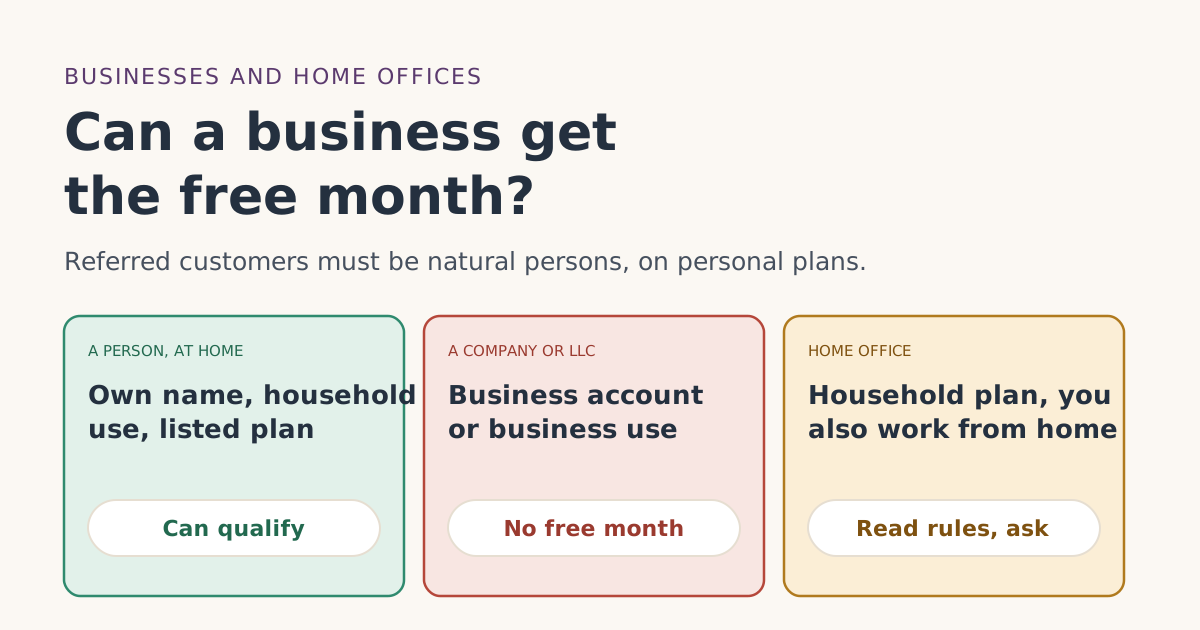
- Starlink’s referral terms say referred customers “must be natural persons.” A company, LLC or other organization can’t be one.
- Every plan on the free-month list is a personal plan: Residential Lite, Residential, Residential 100 Mbps, Residential 200 Mbps, Residential Max, Roam 100GB, Roam 300GB and Roam Unlimited. Starlink’s plan descriptions say Residential and Roam plans are not permitted for business or enterprise uses.
- Business needs such as modified invoicing or tax-exempt certificates are handled on Priority plans, which aren’t on the free-month list.
- A person who works from home and orders in their own name for household use is a different case. The terms don’t address it directly, so read the plan rules and ask if unsure.
- Moving a Business account to a personal one means transferring the device to a new personal account, Starlink says, and that isn’t a new order on starlink.com.
No, a business can’t get the Starlink free month. Starlink’s referral terms say the person being referred “must be natural persons,” which rules out a company, LLC, partnership or other organization. And every plan on the free-month list is a personal plan that Starlink’s own plan rules say isn’t for business use.
There’s a common case in between: a person who works from home, or runs a small business from home, and wants Starlink for the house. That person can meet the written referral conditions if they order in their own name for household use. Below is how the rules fit together, and where the line sits.
Two rules that do the work
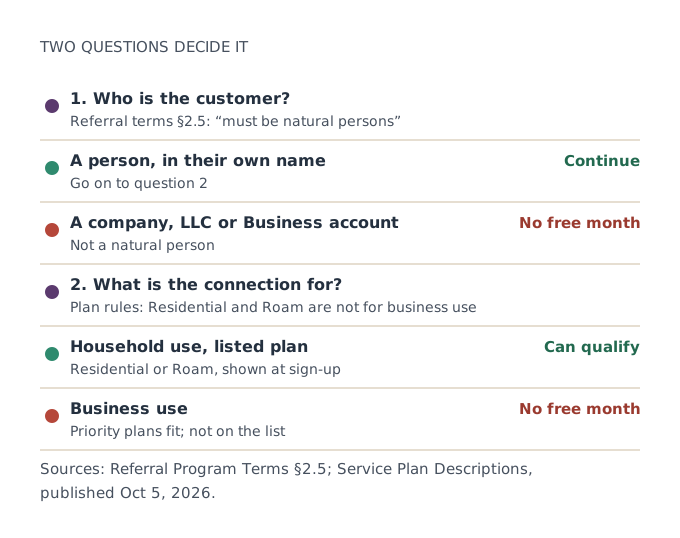
Rule 1: the referred customer is a person. Section 2.5 of Starlink’s US Referral Program Terms defines the referred customer as “an individual who subscribes to Starlink using the Referrer’s Unique Referral Link,” and says plainly: “Referred Subscribers must be natural persons.” A natural person is a human being. A company is a legal person, not a natural one.
Rule 2: the listed plans are personal plans. Starlink’s help article says credits issue only on Residential Lite, Residential, Residential 100 Mbps, Residential 200 Mbps, Residential Max, Roam 100GB, Roam 300GB and Roam Unlimited. Starlink’s Service Plan Descriptions, republished on Oct 5, 2026, describe those plans this way:
- Residential plans are “designed for personal, family, or household use at a fixed land-based location,” and each “is not permitted for business or enterprise uses.”
- Roam Unlimited “is not permitted for business or enterprise uses,” and Roam 100GB and 300GB “have the same terms” except for their data allowance.
So even setting the natural-person rule aside, a business that wanted Starlink for business use would be on the wrong plans to get the free month.
Where business customers belong instead
Starlink’s plan descriptions point business needs to Priority plans. The Residential section says “supplemental customer support for business or government specific requests (e.g., modified invoicing or tax-exempt certifications) are only available under Starlink’s Priority Service Plans.” Priority plans include Local Priority and Global Priority, which sell data in monthly blocks.
Priority plans aren’t on the free-month list, so a business ordering the plan meant for it doesn’t get the month either. Our guide to plans the free month doesn’t list covers them.
Starlink’s help center also notes two account differences:
- “There is no kit limit for Business accounts,” while “Residential accounts are limited to 8 kits.”
- To move from “a Business account” to a “Personal account or service plan,” you “will need to transfer your device and create a new Personal account” by activating it on a new account.
That second point matters. A transfer isn’t a new order on starlink.com, and kits from resellers, retailers or an account transfer are not eligible. Converting an existing Business account doesn’t open a path to the free month.
The home office case
Many people asking this question aren’t companies at all. They’re a freelancer, a remote employee, or someone with a side business who wants internet at home. Here’s how the written rules apply:
| Question | What the rules say | For a home office |
|---|---|---|
| Who orders? | A natural person, in their own name (Terms of Service §10.2) | You, personally, not your LLC |
| Which plan? | A plan from the list, shown at sign-up | Residential or Roam |
| What is the plan for? | Personal, family or household use; not business or enterprise uses | Your household’s internet |
| Have you had Starlink? | you are not, and have never been, a Starlink subscriber | Same as anyone |
If the honest answer is “this is our home internet, and I also work from home,” you fit the personal plans as most people would read them. Starlink doesn’t define “business or enterprise uses,” and we won’t draw that line for you.
If the honest answer is “this is the internet for my shop, office or farm operation, and I want invoices in the company’s name,” then the connection is for the business. That points to a Business account and a Priority plan, without a free month. Don’t put a business connection on a personal plan just to get the credit. Starlink’s plan rules don’t allow it, and the referral terms let Starlink reject a referral it judges isn’t bona fide.
Paying, invoices and taxes
Three practical questions come up for home-office buyers:
- Whose card? Starlink’s Terms of Service say you “must create a Starlink account and enter into this Agreement for the Services in your own name.” Neither the referral terms nor the help article say whose card pays. If you plan to use a business card, ask support before ordering.
- Invoices in a company name? Starlink says modified invoicing is a Priority-plan service. On a personal plan, expect bills in your name.
- Is the free month taxable or deductible? That’s a question for your tax adviser, not us. For what the credit itself covers on the bill, see our guide to rental fees, taxes and other charges.
A worked example
Sam is a self-employed designer with an LLC. Sam works from a spare room at home and wants Starlink for the house, which the family also uses for streaming and school.
- Sam orders through a friend’s referral link on starlink.com, in Sam’s own name, with the family’s US home as the service address.
- Sam picks Residential 200 Mbps at $85/mo.
- Sam pays with a personal card, so there’s no question about the account holder.
- Bill one is paid in full. Bill two carries a one-month service credit, worth one month of the plan.
If Sam had instead wanted Starlink for a rented studio across town, in the LLC’s name, that would be a business connection. A Business account and Priority plan would fit, and no free month would apply.
Questions to settle before ordering
Run through these honestly before you open a referral link:
- Whose account will it be? If the answer is a company, LLC, nonprofit or any organization, stop here: the referred customer must be a natural person.
- Where will the dish go? A family home is the use the Residential plans describe. A shop, office, warehouse or job site is a business location.
- Who uses the connection? A household that also works from home is different from staff, customers or equipment at a business.
- What paperwork do you need? If you need invoices in a company name or tax-exempt status, Starlink says that support lives on Priority plans.
- Have you, personally, had Starlink before? existing or returning customers are not eligible. This applies to the person, whatever the account type was.
- Can you keep a listed plan for two full cycles? The free month needs two full monthly billing cycles on a high-speed plan, continuously, with Standby Mode not counting.
If the first four answers point to a household, you can plan around the free month as anyone else would. If they point to a business, choose the plan that fits the business and leave the free month out of the decision.
Nonprofits, churches, schools and farms
The same two rules settle these. A nonprofit, church, school or farm business is an organization, not a natural person, so it can’t be the referred customer. A family that lives on a farm and wants Starlink for the farmhouse is a household, and the person ordering in their own name for household use meets the written conditions. If the same connection also runs the farm business, that’s the gray zone the plan rules don’t define. Ask Starlink before ordering, rather than after.
Common mistakes
- Ordering in the company’s name and expecting the credit. The referred customer must be a person.
- Converting a Business account to personal to get a free month. That’s a device transfer, not a new order.
- Putting a shop or office connection on a household plan. Starlink’s plan rules say these plans aren’t for business use.
- Assuming the free month applies to Priority plans. They aren’t on the list.
- Forgetting the other rules. You still need to be new, order through a link on starlink.com, and keep a high-speed plan for two full cycles. Our eligibility page lists them all.
What we don’t know
- Where Starlink draws the line on “business or enterprise uses” for people who work from home.
- Whether paying with a business card affects the referral. Nothing published says it does or doesn’t.
- The referral terms also say referrer “participation may be limited to consumer account types.” That’s about the person sharing the link, not you, but it shows the program is aimed at households.
What to do next
- Decide honestly what the connection is for: your household, or a business.
- For a household, check you qualify with the eligibility checker, then compare what one month is worth on each listed plan on our plans page.
- For a business, look at Starlink’s Business and Priority options directly. There’s no free month to plan around.
Questions people ask
Can a business get the Starlink free month?
What does “natural person” mean in Starlink’s referral terms?
I run a small business from home. Can I get the free month?
Can I pay with my company card and still get the free month?
Can a Business account switch to a personal plan to get the free month?
Which Starlink plans are for businesses?
Sources
- How do I use a referral link? (Starlink help center) Starlink
- Referral Program Terms, US (starlink.com legal document DOC-1882-84808-83) Starlink
- What are the Residential plans? (Starlink help center) Starlink
- Service Plan Descriptions, US (Starlink legal document DOC-1728-44881-79, published 2026-10-05) Starlink
- Additional FAQs - Service Plans (Starlink help center) Starlink
- Can I add additional Starlinks to my account? (Starlink help center) Starlink
- Starlink Terms of Service, US, §10.2 (Starlink legal document DOC-1020-91087-64) Starlink
Related guides
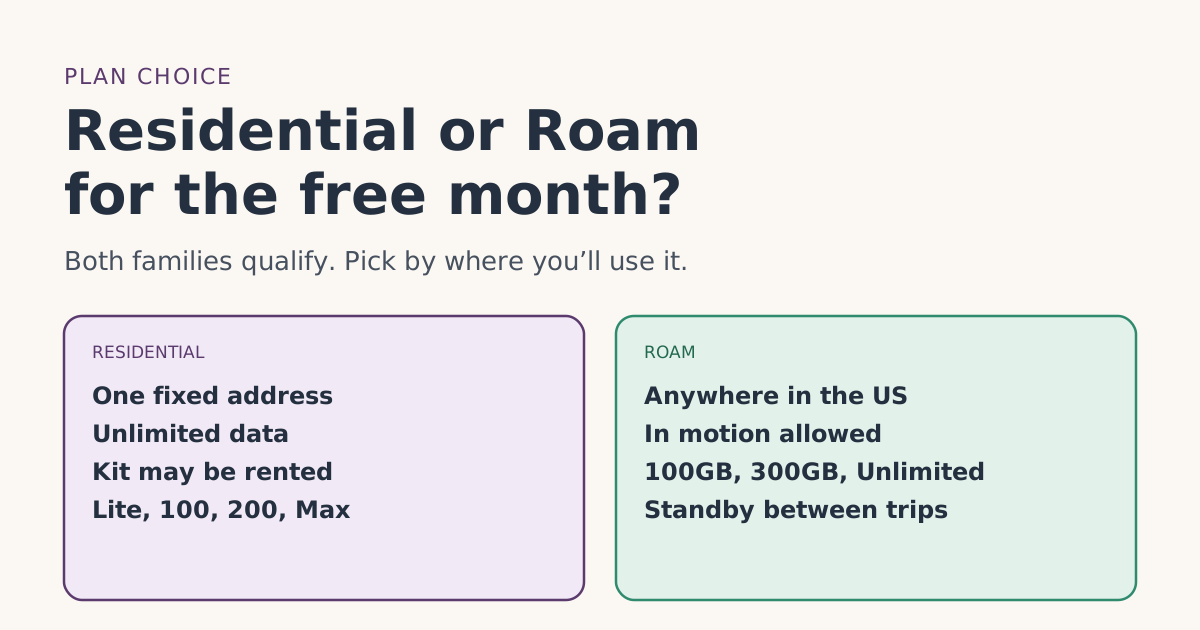 PlansResidential or Roam for the free month: how to chooseStarlink Residential and Roam plans both carry the referral free month. How they differ, what the month is worth on each, and which fits home or travel.
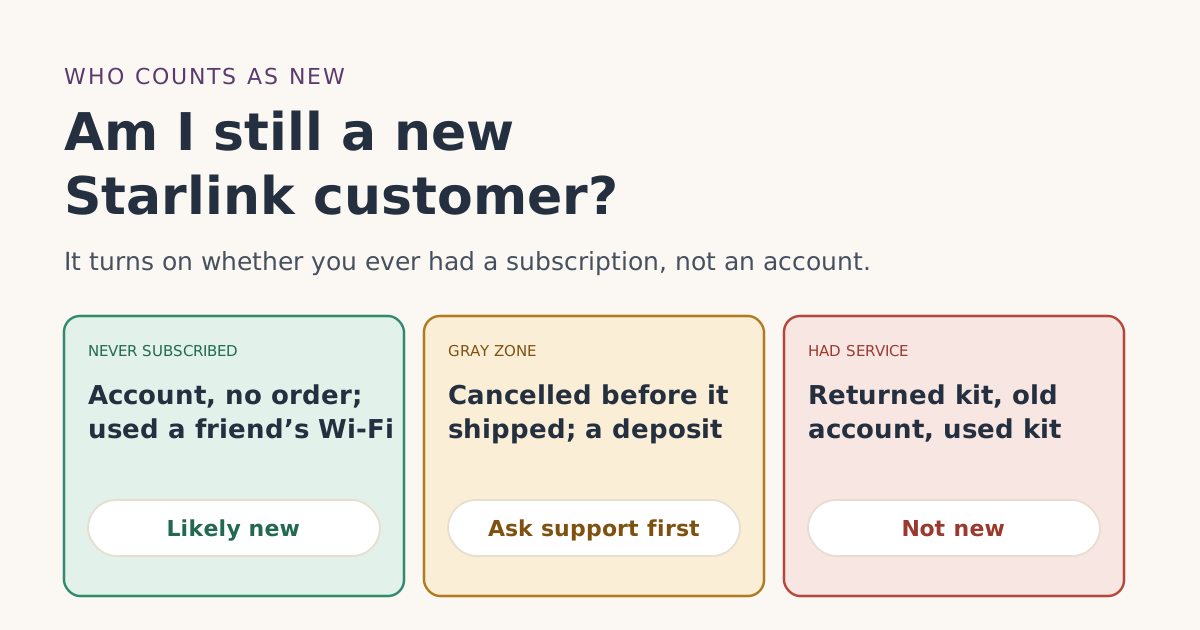 Who qualifiesAm I still a new Starlink customer? Accounts, cancelled orders, past returns and new emailsMade an account, cancelled an order or returned a kit before? How Starlink’s “never been a subscriber” rule likely reads for each case, and when to ask first.
 Who qualifiesAlready have Starlink? Second kits, second homes and a second person in the householdExisting Starlink customers don’t get the free month on a second kit or vacation home. What about a spouse or adult child? What the terms say and leave open.